The split save is the wide, low leg-split a goalkeeper uses to reach shots aimed at the bottom corners. Done well, it turns your legs into a fast-spreading barrier that covers ground a dive cannot. The technique rests on four things: a balanced ready stance, early reading of the shot, an explosive push into the split, and (the part most keepers overlook) a smooth glide across the floor instead of a shoe that catches and jars your knees and ankles. This guide breaks the split save down stage by stage for handball, futsal and floorball keepers, covers the common mistakes, and explains the friction problem behind why so many keepers tape their shoes.
What a split save is and why it matters
A split save is exactly what it sounds like: from a standing or crouched position, you drive both legs sideways into a low, wide split to block a low shot heading for the corner. Because your feet finish far apart and close to the floor, you cover the hardest zone for any keeper to defend, the bottom corners, where a well-placed shot leaves almost no reaction time. In handball, futsal and floorball the goal is wide and the shots are quick and close, so you rarely have time for a full airborne dive, and a dive commits your whole body to one spot. The split keeps you upright and balanced for longer, covers both sides from a stable base, and gets your lower leg to the floor faster.
The split save technique, stage by stage
- Ready stance. Feet a little wider than your hips, knees softly bent, weight on the balls of your feet, hands up and slightly forward. You want to feel light and springy, not planted, a base wide enough to push explosively sideways but not so wide that you lose power.
- Read the shot. Watch the shooter's hips, plant foot and arm swing rather than the ball. They tell you where the shot is going a fraction earlier. The best keepers commit to a direction slightly before the ball is released, which is what buys the time a split needs.
- The explosive split. Push hard off the leg opposite the shot, driving the near leg out low and fast toward the corner. Keep your hips low and your torso upright so your arms stay available for high shots. The power comes from the pushing leg; the reaching leg simply travels to where it needs to be.
- The glide. As your reaching foot and lower leg meet the floor, they should slide the last stretch into the corner rather than stopping dead. A clean glide extends your reach by a surprising margin and lets your joints decelerate gradually instead of absorbing a sudden jolt.
- Recovery. The moment the shot is dealt with, pull your legs back underneath you and stand up ready for the rebound. A split that leaves you stranded on the floor concedes the follow-up, so practise the stand-up as deliberately as the save itself.
Common mistakes keepers make
- Going too early or too late. Commit before you have read the shot and a good shooter changes the corner; commit after the ball is gone and you never arrive. Timing is the whole skill.
- Standing too tall. A high centre of gravity means a slow first push and a split that never gets low enough to cover the bottom corner.
- Dropping the hands. Letting your arms fall as the legs spread opens the top of the goal. Keep the upper body tall and the hands live.
- A shoe that catches. When your foot hits the floor and grips instead of sliding, your reach stops short and the braking force fires straight into your knee and ankle, as much an equipment problem as a technique one.
The friction problem: why keepers tape their shoes
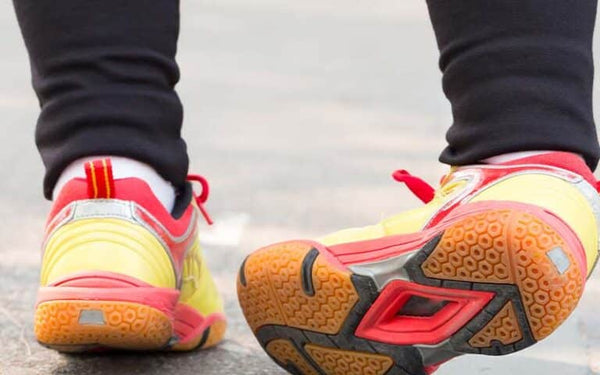
Indoor courts (linoleum, wood and modern sports flooring) are built for grip so players can cut and sprint without slipping. That grip is what you want when you push off, and what works against you at the end of a split. When your reaching shoe lands and the sole grabs the floor, three things go wrong at once: your glide stops short of the corner, your body jolts to a halt, and the braking force loads your knee and ankle at a bad angle. Repeat that hundreds of times a season and it punishes the joints.
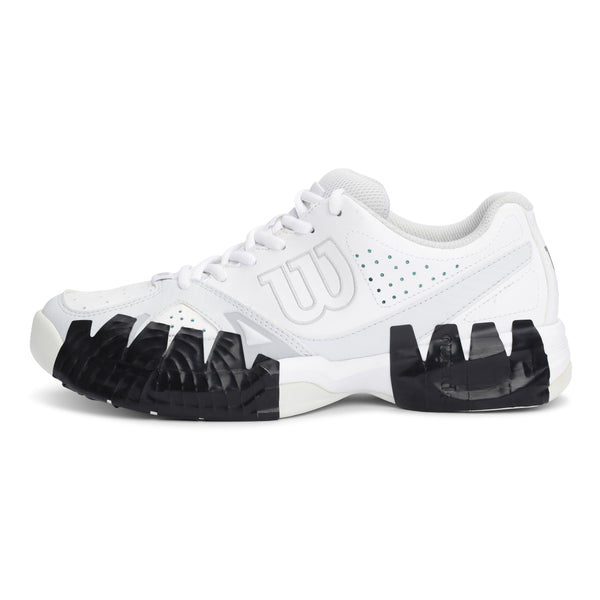
This is why keepers have long taped the heel and side of their shoes: tape is slicker than rubber, so the shoe slides instead of catching. It works, but only for a while. Tape wears through mid-session, the glide changes as it frays, and you are re-taping constantly to keep a consistent surface.
Shoe and surface setup
Start with a well-fitting indoor court shoe with a stable heel, the same base you would want for any lateral movement. The split loads the heel and outer heel edge of the trailing shoe as it slides, so that is the contact point you want to make glide smoothly and predictably. Keep that area clean so the glide stays consistent, and remember the goal: a shoe that grips when you push and releases when you slide.
Where SplitOut fits
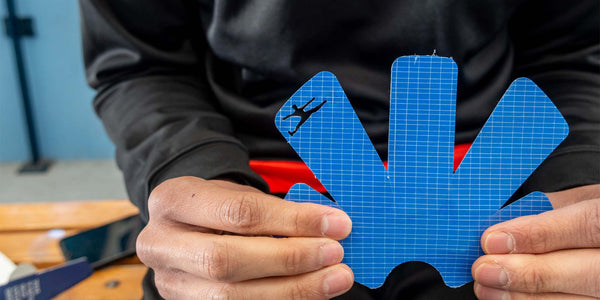
This is the exact problem SplitOut is engineered to solve. It is a low-friction patch applied to the heel of a goalkeeper's shoe, giving a smoother, faster and more consistent glide than sports tape, and because the shoe decelerates gradually instead of catching, it reduces the braking forces that load your knees and ankles during slides. Unlike tape, it does not fray or shift mid-session: one patch lasts roughly 20–40 hours of play, a pack of four covers two pairs of shoes, and it works on any indoor sports shoe across handball, futsal and floorball. It leaves a small residue that wipes off with the included alcohol wipe, and it is made in the EU.
The difference from tape is consistency. Tape gives you a slick surface until it wears through; an engineered patch gives you the same predictable glide from the first save to the last, and protects the joints while it does it.
Elite keepers use it for exactly these reasons. As Emil Nielsen of FC Barcelona and the Danish National Handball team puts it: "SplitOut is a great product because it is better than regular sports tape. It makes you faster during splits, and it lasts longer." Jannick Green of PSG adds that "SplitOut helps me achieve my ideal split." Futsal internationals Frederik Peytz and William Rams use it too.
Practice drills for a better split save
- Wall-reach splits. From your ready stance, split to touch a cone set at the width of the goal, then recover to standing. Focus purely on getting low and gliding into the mark. Ten each side.
- Reaction splits. Have a coach point or call a corner at the last moment so you have to read and react rather than pre-plan. This trains the timing that makes or breaks the save.
- Shot repetition. Face low, firm shots into alternating corners and treat every one as a full save plus recovery. Quality over quantity. Stop the moment your technique gets sloppy.
- Recovery ladders. Split, stand, reset, immediately split the other way. Building the stand-up into muscle memory is what stops rebounds going in.
Frequently asked questions
What is a split save in handball or futsal?
It is a save where the goalkeeper drives both legs sideways into a low, wide split to block a shot aimed at the bottom corner. It covers the lowest, hardest zone of the goal while keeping you upright and balanced, and gets your lower leg to the floor faster than a full dive.
Why do goalkeepers tape their shoes?
To make the shoe slide instead of catch. Indoor floors are high-grip, so a bare sole grabs at the end of a split, cutting your glide short and jarring your knees and ankles. Tape is slicker than rubber, so keepers use it to glide further. The drawback is that tape wears through and frays mid-session, so the glide is inconsistent and you re-tape constantly.
How do I stop my shoe catching during a split save?
Reduce the friction at the contact point, the heel and outer heel edge of the trailing shoe. Keep the floor clean, run a stable court shoe, and apply a low-friction surface to the heel. Tape works short-term; an engineered patch like SplitOut gives a smoother, more consistent glide that lasts far longer and helps protect your joints.
Is SplitOut better than sports tape for goalkeepers?
For most keepers, yes, on consistency and durability. Tape gives you a slick surface until it frays, usually within a session; a SplitOut patch glides more smoothly and lasts roughly 20–40 hours without shifting. Because the shoe decelerates gradually rather than catching, it also reduces braking forces on the knees and ankles during slides.
Does a low-friction patch make me slip when I push off?
No. The patch sits on the heel, the part of the shoe that slides during a split, not the forefoot you push off from. Your grip when you drive and sprint is unchanged; the low-friction surface only matters at the moment the trailing shoe glides into the corner.